
Defeating Triumphalism
from an exposition of Genesis 23

One of the great tug-of-wars in faith is between the “now” and the “not yet.” We all hate to wait. This impatience fuels a powerful, pervasive attitude in modern life and faith: triumphalism. It’s not necessarily a desire for victory, but “a desire for victory hardened into a mindset,” as Frederick Schmidt writes in “The Triumph of Triumphalism.” It’s the conviction that we have triumphed now, that every blessing is instantly available, and that we can effectively shout or pray away all unpleasantness and waiting.

This attitude is more dangerous than a simple prosperity gospel. Out-and-out prosperity preachers, like Kenneth Copeland, often are proven wrong by their teachings not working. People “confess” to having millions but stay poor. They “name and claim” healings that don’t arrive. Copeland himself claimed to have blown away the covid virus in the Spring of 2020. It didn’t work. But most triumphalists are more ambiguous, generally promising your “best life now,” teaching that you have been given everything you need, already; that we don’t have to wait. When applied to faith, triumphalism convinces us that this broken world is already paradise—or can be, if we just find the secret knowledge. It’s the belief that we can simply erase all problems, all suffering, and all waiting.
The Stolen Promise of Victory
Triumphalism often takes promises meant for the future and claims them as a present reality. We hear it in the misapplication of 1 Corinthians 15:55: “O death, where is your victory? O death, where is your sting?” Quoted out of context, it sounds like a declaration that death has no sting now.
That’s the triumphalist lie. But the Bible frames this as a promise for the future: when our bodies are resurrected, “then shall come to pass the saying that is written: ‘Death is swallowed up in victory.’” Triumphalism steals this future promise and pretends we already possess it.
It says, This is paradise. You have it now. But this is not paradise. People are still dying. Death still has its sting. And this pretense inevitably leads to disillusionment when reality breaks in.
Abraham, The Grave, and The True Legacy
The story of Abraham shows us the profound gap between the promise and the present reality of the grave. God promised Abraham an immense inheritance—all the land from Egypt to the Euphrates. He believed this promise, and his faith was counted to him as righteousness—a blessing he received now.
Yet, when his beloved wife Sarah dies, Abraham is still a foreigner, a wanderer. The very first piece of property he owns is not a vast estate, but a grave—a cave he must purchase from the Hittites to bury his wife.
The fact that the first piece of property Abraham owns is a grave “tells us a lot about what we have to live with while we’re waiting.” We have to live in the midst of death. Triumphalism, which wants to pretend this is paradise, fails to comprehend the wisdom of Ecclesiastes (7:2).
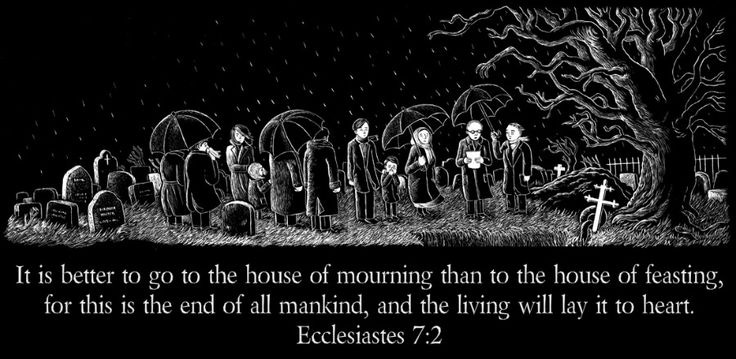
Abraham was promised the entire land, but in his lifetime, he received only a grave. That was his piece of the promise.
Weeping in the Shadow of Death
Abraham shows us that genuine faith means he had to wait, and sometimes weep while waiting. Abraham “came to mourn for Sarah and to weep for her” (Genesis 23:1-2). Sorrow is mixed with hope as when the Lord Jesus wept at the tomb of Lazarus.
Triumphalists today question why Jesus wept. Why did Jesus weep? Surely, He knows we have triumphed over death?, they ask. Did He weep over their unbelief? People were disbelieving Him throughout the gospels; why does He suddenly weep over it at Lazarus’ tomb? You see, it’s not at all a question – why Jesus wept? – when your view isn’t distorted by triumphalism. Jesus wept because that’s what we do, now, before death has lost its sting. We weep while we wait. But because we believe in the resurrection and the life, our tears are mixed with hope, and so lose some of their sting.
For those of us who share the faith of Abraham, our legacy is not to obsess over the physical land in the Middle East—a promise which the Old Testament tells us was already fulfilled in the time of Joshua, David, and Solomon. The legacy for us is what the land represented: a place of peace to live safely on earth. We have a promise of a new heaven and a new earth, where there is no death or tears.
Our challenge is whether we will believe the triumphalist lie and lose our faith when we realize this isn’t paradise, or whether we will learn the lesson of the grave.
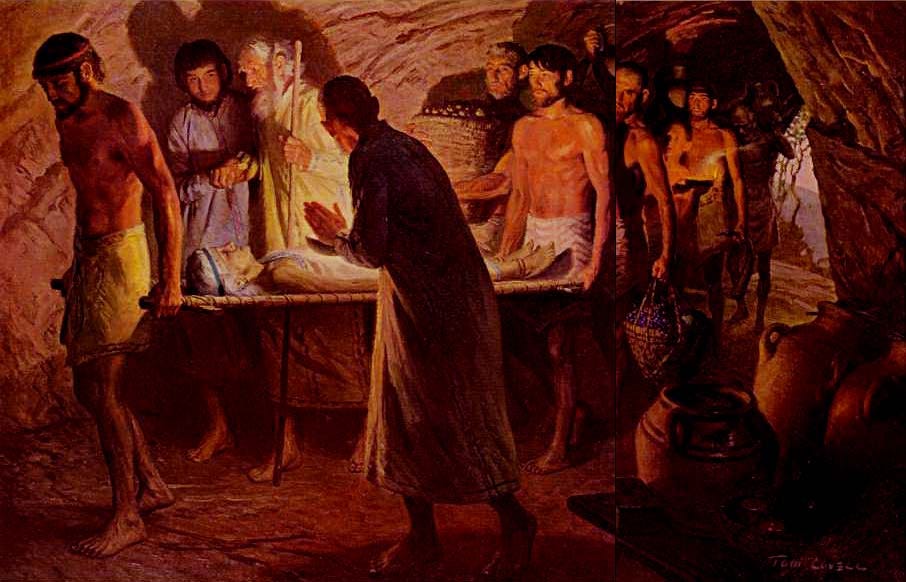
We have a glorious future and exceedingly great and precious promises. Yet, if Christ doesn’t return yet, there is one thing we can be sure we will have to deal with: graves, and one day, one will be ours. Our “piece of the promise” in this life will include a grave. Our test is whether, in this deep shadow of death, we will believe Christ’s words: “I am the resurrection and the life.”
Do you want it now? The triumph over death, resurrection, not only justification and regeneration, but perfection, glorification, health, and wealth now? Yeah, me too. So did Abraham. But his tears, and ours, will not be completely dried until the Offspring, the Lord Jesus, brings the new earth, the regeneration of all things, until Sarah and Abraham come out of that tomb, next to Mamre, until Christ has put all His enemies under His feet, and then death will have totally lost its sting.
Our tears won’t be completely dried until then, but as we weep while we wait, those tears are mixed with hope. Because even now, for the believer, right now while we are amid the dead, we can, like Abraham, look up and see that we have a promise that soon even death will lose its sting. And so, for now, in this location, right here, while we wait, even our tears lose some of their sting. Do you want that now? Then believe.
For the entire exposition of Genesis 23, listen:
Covenant Reformed Baptist Church is Danville’s & Caswell County’s Reformed church.