
God’s Guilty Servant
from an exposition of Jeremiah 25

One Event, Two Intentions
The Lord called Nebuchadnezzar “My servant.”
That sounds strange. Nebuchadnezzar did not worship the Lord. He did not invade Judah because he wanted to obey God, execute divine justice, or advance God’s kingdom. He wanted territory, tribute, glory, and power. Yet God said, “I will send for Nebuchadnezzar the king of Babylon, My servant,” and bring him against Judah.
Nebuchadnezzar was doing God’s will whether he knew it or not.
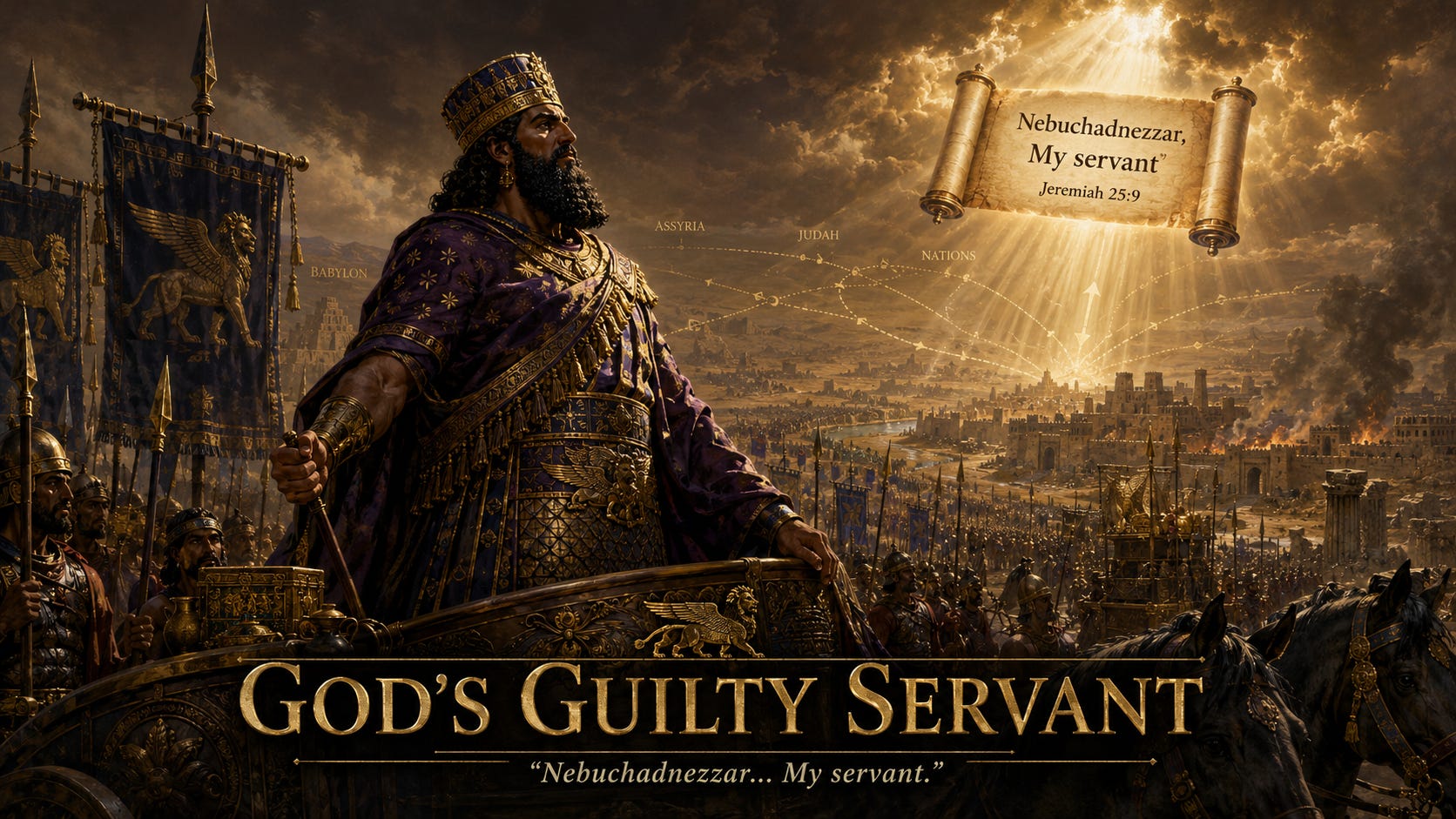
Everyone serves God one way or another. You can serve Him intentionally and joyfully, seeking His kingdom, or you will serve Him unintentionally, imagining that you are advancing your own little kingdom, only to discover that you have accomplished His purpose.
John Calvin observed that God makes use of the wicked as His scourges. Nebuchadnezzar was one of those scourges. God sent him to strike Judah because Judah had persistently refused to repent. For twenty-three years Jeremiah had risen early and pleaded with the people. Other prophets had warned them too. Still they would not listen.
So God summoned Babylon.
The Babylonians thought they were acting according to their own free will—and they were. Yet their free choices were being directed by the sovereign purpose of God. They came against Jerusalem, destroyed the city, extinguished its celebrations, silenced its mills, darkened its lamps, and carried its people into exile.
The holy war that Israel had once conducted against the Canaanites was now directed against Israel. The covenant people had become like the nations they displaced and therefore came under the curses of the covenant.
God Was Right; Babylon Was Wrong
Then comes the surprise. After calling Nebuchadnezzar His servant and sending him against Judah, God declared, “I will punish the king of Babylon and that nation.”
How could God punish Babylon for doing what He sent Babylon to do? Because the same event can contain two different intentions.
From God’s hand, Jerusalem’s destruction was righteous judgment. Judah had broken the covenant, rejected God’s Word, worshiped idols, and practiced injustice. The wages of sin is death. God had every right to judge them.
But Babylon had no right to do it.
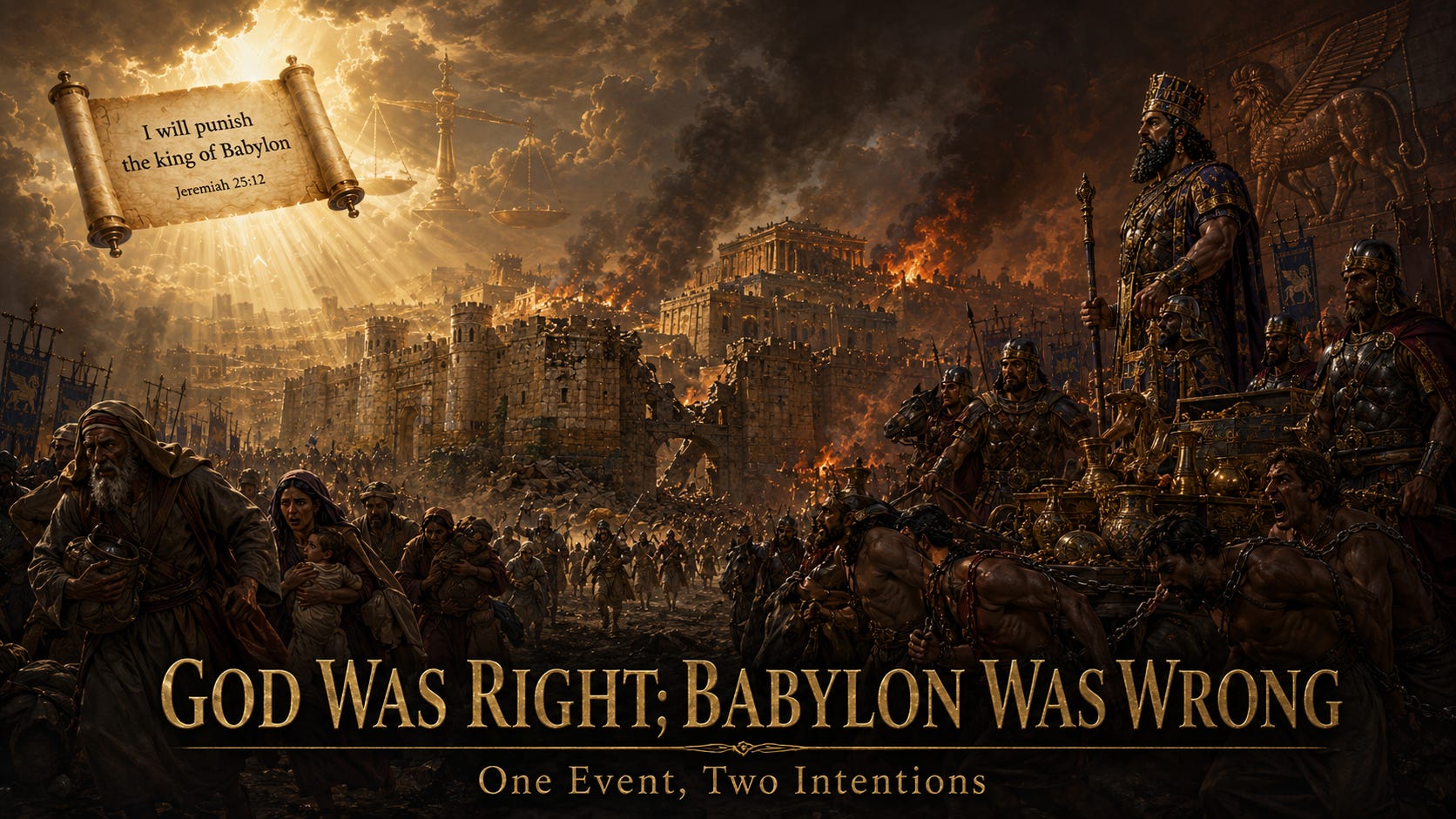
The Babylonians were not defending themselves from Judah. They were not motivated by love for justice or zeal for God’s holiness. They invaded out of greed, violence, cruelty, and imperial pride. God intended judgment; Babylon intended evil.
The same distinction appears in Joseph’s words to his brothers: “You meant evil against me, but God meant it for good.” Joseph did not say that his brothers meant something evil while God merely permitted it. God and the brothers meant the same event—the selling of Joseph—for entirely different purposes.
The brothers were guilty. God was righteous.
So it was with Babylon. God’s sovereign control did not excuse Nebuchadnezzar’s wickedness. Babylon remained morally responsible for what it freely desired and deliberately did.
God’s instrument may be evil even when God’s purpose is good. His servant may be guilty even while perfectly accomplishing His decree.
Do Not Confuse the Rod with the Hand
This changes how we understand suffering.
When harm comes through another person, we naturally concentrate on the instrument. We say, “They were abusive. They were selfish. They lied. They betrayed me. They had no right to do that.”
They may indeed be guilty. Babylon was guilty. But faith looks beyond the rod to the hand holding it. The wrongdoing of the instrument does not mean that God has lost control. It does not mean that suffering has slipped outside His providence.
We may not know precisely why a particular trial has come. Nevertheless, Jeremiah teaches us to confess that God rules over it. The person who harms us may mean it for evil while God means it for discipline, correction, humility, sanctification, or some good that we cannot yet see.
That does not make evil good. It means evil cannot defeat God. We should therefore resist both bitterness toward the instrument and accusation against God. The Babylonians would answer for Babylonian cruelty. Judah still needed to repent.
The Cup Comes for the Servant Too
Babylon could not escape merely because it had been useful.
After Judah drank the cup of wrath, the cup passed to the surrounding nations. Eventually it came to Babylon itself. The empire that forced others to drink would also be forced to drink.
No nation, ruler, army, or individual is beyond God’s judgment. The powerful may imagine that they are writing history, when in reality they are only servants carrying out purposes they neither understand nor control. Then, when their service is completed, they too must stand before the Judge.
Nebuchadnezzar was God’s servant. He was also God’s enemy. He accomplished God’s decree. He was also guilty for accomplishing it wickedly.
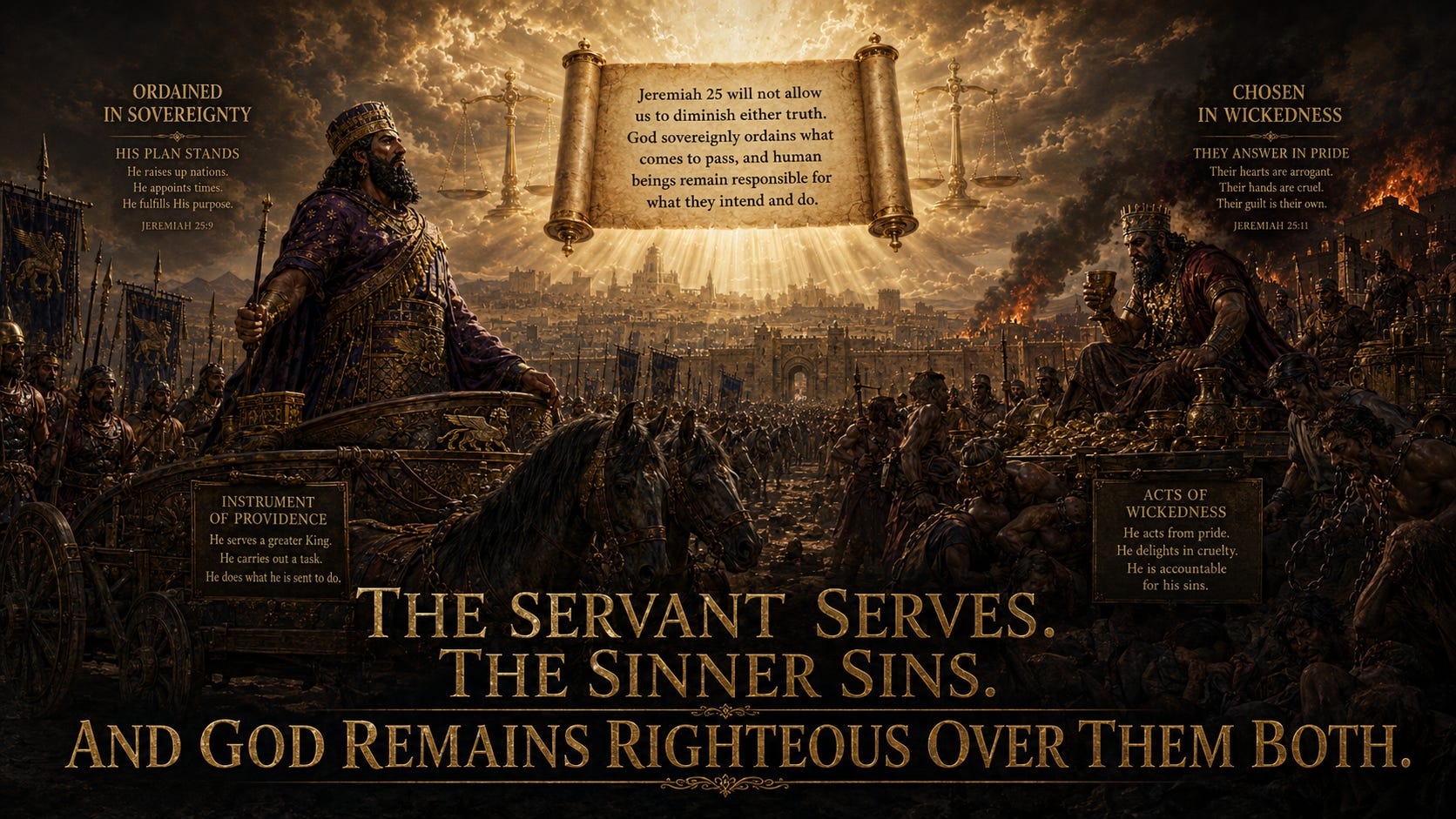
Jeremiah 25 will not allow us to diminish either truth. God sovereignly ordains what comes to pass, and human beings remain responsible for what they intend and do.
The servant serves.
The sinner sins.
God remains righteous over them both.
To hear the entire exposition of Jeremiah 25, click the link and listen:
Covenant Reformed Baptist Church is Caswell County’s and Danville’s Reformed church.
Deeply true.
Outstanding article. Thank you. You do an excellent job here of untangling a difficult -- and often uncomfortable -- subject. "The brothers were guilty. God was righteous." While the world offers AI-smart Meta glasses for some wild experiences, you, on the other hand, urge us to don our own pair of Hand-of-God-discerning, Scripture-informed, lenses to help us keep our heads straight and our feet on the ground.